Wildcard Versus Sing...
Wildcard Versus Single Domain SSL: Which Fits?
Wildcard Versus Single Domain SSL: Which Fits?
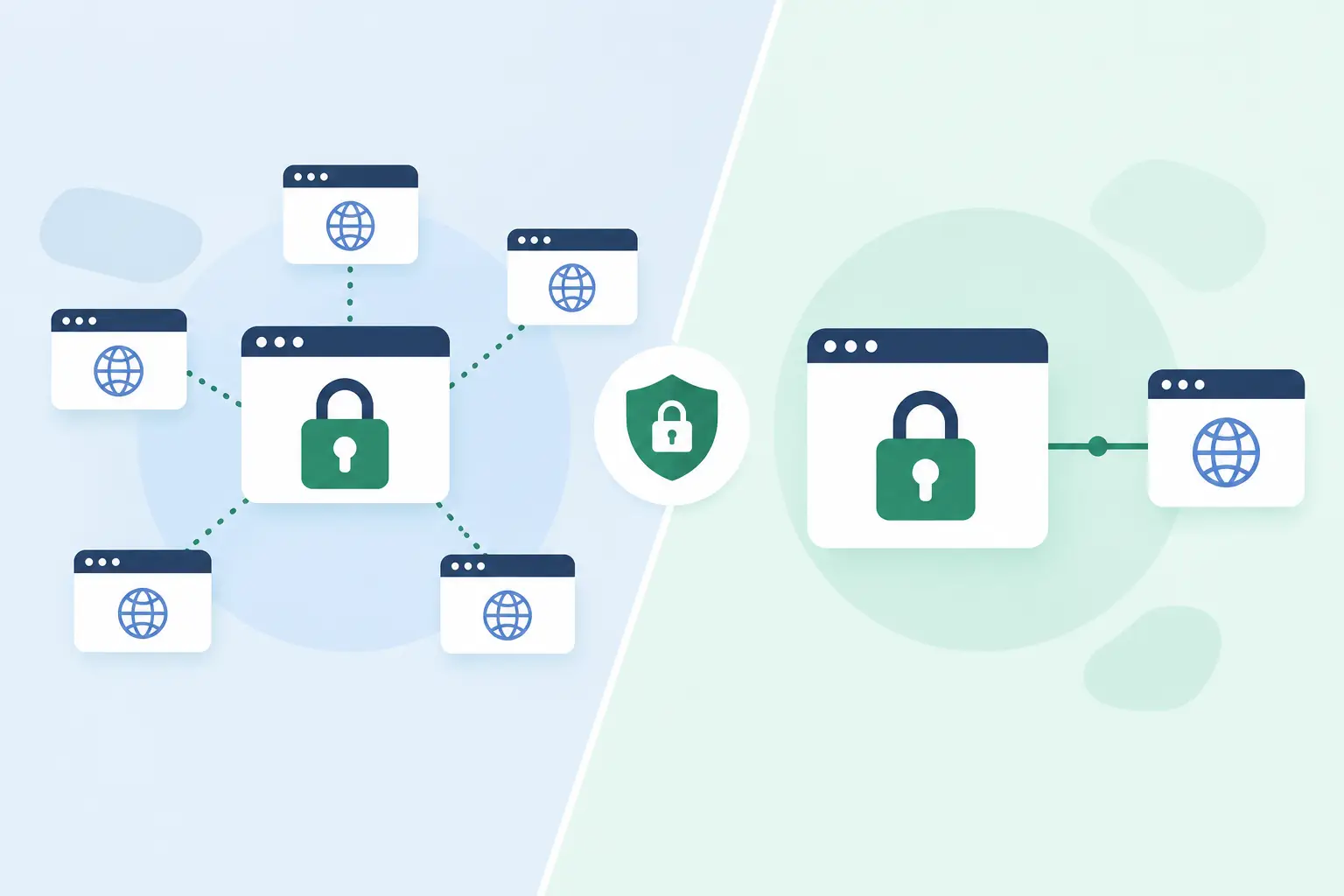
A certificate choice that looks minor can create unnecessary renewal costs or leave a new service unprotected later. The wildcard versus single domain SSL decision comes down to one practical question: are you securing one named website address, or a group of first-level subdomains under the same domain?
Both certificate types encrypt traffic between a visitor’s browser and your website. Both support HTTPS, protect information in transit, and help visitors see that familiar padlock in their browser. The difference is the number and pattern of hostnames they cover. Choosing correctly helps keep your website, customer data, login pages, and online transactions protected without paying for coverage your business does not need.
Wildcard Versus Single Domain SSL at a Glance
A single domain SSL certificate protects one fully qualified domain name, such as `www.example.com` or `shop.example.com`. It is a straightforward choice for a business with one primary website, landing page, customer portal, or online store address.
A wildcard SSL certificate protects a domain and an unlimited number of first-level subdomains using an asterisk. For example, a certificate for `*.example.com` can protect `shop.example.com`, `support.example.com`, `mail.example.com`, and `portal.example.com`.
The key limitation is depth. A wildcard certificate for `*.example.com` does not automatically cover `payments.shop.example.com`. That is a second-level subdomain. It also may not automatically include the root domain, `example.com`, unless it is specifically included on the certificate. Certificate options and issuer rules vary, so confirm the exact names included before ordering.
When a Single Domain SSL Is the Better Fit
For many small business websites, a single domain certificate is the practical answer. If your public site runs at one address and you do not plan to create several subdomains, it provides the protection you need with less complexity.
Consider a single domain SSL when your business has a primary WordPress site at `www.example.com`, a single ecommerce storefront, or one secure login area. It also works well for a campaign microsite that will remain at one distinct hostname. If your site uses both the root domain and the www version, verify whether your certificate configuration includes both names. Some certificate products support this common pairing, but it should never be assumed.
Single domain certificates can also make certificate management easier. There are fewer hostnames to document, fewer teams or applications relying on the same certificate, and less risk that an unrelated service is affected by a renewal or configuration change.
That simplicity matters when your website supports daily sales, appointment requests, client communications, or lead generation. A certificate should be easy to deploy, easy to renew, and matched to the addresses visitors actually use.
When a Wildcard SSL Makes Sense
Wildcard SSL is designed for organizations that regularly use multiple first-level subdomains. An ecommerce business may operate its public store at `shop.example.com`, customer help center at `support.example.com`, and account portal at `account.example.com`. A professional services firm might use `secure.example.com` for client access and `events.example.com` for registrations.
In these cases, managing a separate certificate for every subdomain can become inefficient. A wildcard certificate provides a single coverage pattern for the domain’s first-level subdomains. It can reduce the number of certificates your team needs to track and simplify expansion when a new subdomain is added.
This is especially useful for agencies and web professionals managing several functions under one client domain. It can also suit businesses with development, staging, or service-specific subdomains that need HTTPS. Still, production and nonproduction environments should be planned carefully. Protecting a hostname with SSL is necessary, but it does not replace access controls, account isolation, backups, patching, or server-level security protections.
Wildcard coverage is not automatically the best value simply because it covers more names. If you only operate one public hostname, the additional flexibility may go unused. The right purchase is the certificate that supports your current setup and realistic growth plans.
A practical example
Imagine a local retailer with a website at `www.rivercityoutfitters.com` and an online store at the same address. A single domain SSL is usually sufficient, provided the certificate covers every version of the address customers reach.
Now imagine that the retailer adds `shop.rivercityoutfitters.com`, `help.rivercityoutfitters.com`, and `members.rivercityoutfitters.com`. A wildcard certificate may be more efficient because it can protect each first-level subdomain under the same domain.
If the retailer instead has unrelated names such as `rivercityoutfitters.com`, `rivercitygear.com`, and `rivercityrentals.com`, a wildcard certificate is not the answer. Wildcards do not cover separate domains. A multi-domain SSL certificate, often called a SAN certificate, may be a better fit for that structure.
Coverage Is Only One Part of SSL Planning
A certificate’s hostname coverage is important, but it is not the full security decision. You should also consider validation level, renewal process, private key handling, and the systems that use each certificate.
Domain Validation SSL confirms control of the domain and is commonly used for standard business websites, blogs, stores, and service portals. Organization Validation options add business identity checks. The appropriate choice depends on your operational requirements, customer expectations, and any industry or procurement rules your business must meet.
For either wildcard or single domain SSL, renewal deserves attention. An expired certificate can trigger browser warnings that stop customers from completing a purchase, submitting a form, or signing into a client area. Set clear ownership for certificate renewals, maintain current administrative contact information, and test installation before a certificate expires.
Private keys require the same care. A wildcard certificate can be installed across multiple servers or services when permitted by its license and operational needs. However, wider deployment also means more systems may handle the certificate’s private key. Restrict access, store keys securely, and replace the certificate promptly if a key may have been exposed.
Questions to Ask Before You Order
Start with the domains and subdomains your customers use now. Then look at the next 12 months of planned services, store features, portals, and marketing sites. You do not need to buy for every hypothetical project, but you should avoid a certificate that will be outgrown as soon as a scheduled launch goes live.
Ask whether all names sit directly below one domain. If they do, wildcard coverage may be useful. If you need to secure only one hostname, a single domain certificate is usually cleaner. If you need several unrelated domains, compare multi-domain SSL options instead.
Also check whether your hosting environment includes SSL installation support, certificate management tools, and knowledgeable help when configuration questions arise. Businesses should not have to choose between getting a certificate installed correctly and keeping daily operations moving. Managed hosting, daily backups, reliable email, and responsive technical support all work together to keep an online presence available and trustworthy.
Knight Web Services has supported business websites, domains, and hosting customers since 1996, with practical services built around continuity, security, and live support. Whether you run a single WordPress website or several customer-facing services, matching certificate coverage to your actual domain structure keeps the decision clear.
Choose the certificate that fits the addresses your customers rely on today, document the names it covers, and revisit that plan before your next website or subdomain launch. That small step helps keep secure connections working where your business needs them most.